Certification prep, straight talk.

NYDFS Requires "Qualified Cybersecurity Personnel." It Never Defines Qualified.
New York's cybersecurity regulation orders covered entities to staff up with qualified cybersecurity personnel, then leaves the definition of qualified entirely to the entity. That gap is where certification programs quietly became audit evidence.
Ric Hall, CRO
September 28, 2026

The Backup Job Succeeded. Nobody Proved the Restore Would.
A green checkmark on a backup job tells you data was written somewhere. It tells you nothing about whether that data will come back when you need it. Here's what separates backup completion from verified recoverability, and who on your team should own the difference.
Rodney Hall, COO
September 28, 2026

Security Teams Have the Worst Shadow AI Problem in the Building
Security professionals are the heaviest unsanctioned AI users in most organizations, which turns a governance gap into a personal credibility problem. This piece looks at what that means for how employers judge AI skill, and how to convert quiet tool use into provable, accountable expertise.
Jillian, CMO
September 28, 2026

Who Signed Off on That Vendor? The Question Examiners Ask Before the Breach
Bank examiners, insurance regulators, and cyber insurance underwriters are no longer satisfied that a vendor review happened. They want to know who did it and whether that person was qualified to catch what a clean-looking SOC 2 report actually hides.
Ric Hall, CRO
September 25, 2026

The SEC Won't Name Your Board's Cyber Expert. It Will Name Your CISO.
The SEC dropped its proposal to make companies disclose board-level cybersecurity expertise, but Item 106 still forces disclosure of management's expertise, and the SolarWinds case proved a named CISO can face personal liability for it. Here's what that means for who leadership picks to hold the credential.
Randy Hall, CEO
September 25, 2026

The Kill Switch Question: What the New Agentic AI Security Advisory Actually Asks You to Prove
A joint advisory from six national cybersecurity agencies turned agentic AI oversight into a named, auditable control set. Most security teams cannot yet produce the evidence it demands.
Rodney Hall, COO
September 25, 2026

AI Skills Are Now on Every Resume. Certification Is How You Prove Yours Are Real.
Job postings naming AI skills have doubled in a year, but hiring managers say most resume AI claims don't survive a follow-up question. Here's how a certification like CompTIA SecAI+ closes that verification gap, and how to tell if adding one actually fits your role.
Jillian, CMO
September 25, 2026

The Tabletop Exercise Found the Gap. Six Months Later, It's Still There.
Most organizations run their business continuity tabletop exercise, write the after-action report, and file it. The findings rarely make it back into the plan. This piece looks at why that loop breaks and what regulators and exam bodies actually expect from it.
Rodney Hall, COO
September 24, 2026

Who Signs the ATO? Why Contracting Officers Now Want a Name and a Credential Attached
Federal contracts and cloud authorizations increasingly require that a specific certified person, not just a compliant company, stand behind the risk package. This piece walks through why the CGRC credential has become that named accountability marker.
Ric Hall, CRO
September 24, 2026

Technical Skill Gets You to Senior Engineer. It Won't Get You to CISO.
Senior security engineers keep hitting a wall at Director level, and it isn't a skills problem. It's a credentialing problem, and the data on what boards actually screen for explains why.
Randy Hall, CEO
September 24, 2026

AAISM or SecAI+: Choosing the Right AI Security Credential for Your Role
Two new AI security certifications launched within months of each other in 2025, and they're not interchangeable. This piece breaks down what CompTIA SecAI+ and ISACA's AAISM actually test, who each one is built for, and how to decide between them based on the work you do now.
Jillian, CMO
September 24, 2026

Why Federal Contracts Now Name a Specific Certification Instead of "Security Experience"
Federal procurement language has quietly shifted from asking for "qualified staff" to naming exact credentials by work role. This piece walks through what DoD 8140, CMMC, and FedRAMP actually require and how a contractor proves it before award.
Ric Hall, CRO
September 23, 2026

Post-Quantum Migration Has Deadlines Now. Most Security Teams Still Don't Have a Plan.
CNSA 2.0 and the finalized NIST post-quantum standards turned a theoretical future problem into a dated compliance requirement. Here's what actually has to change in your infrastructure, and who on your team needs to know how to do it.
Rodney Hall, COO
September 23, 2026

Your Training Budget Just Grew. Here's How to Decide What It Buys First.
Security training budgets are climbing again, but the money is chasing AI skills specifically, not headcount or general upskilling. This piece lays out a sequencing framework for deciding which certifications to fund first when the budget grows but stays finite.
Randy Hall, CEO
September 23, 2026

AI Security Job Postings Are Growing Faster Than Any Other Tech Specialty. Here's What Employers Want Proven
Job posting data shows AI security as the fastest-growing specialty skill in tech, but most resumes claiming "AI literacy" offer no way to verify it. Here's what employers are actually screening for and how a new expansion certification fits the gap.
Jillian, CMO
September 23, 2026

The Data Retention Schedule Auditors Actually Ask to See
Regulators don't ask whether you have a data retention policy. They ask you to produce it, show who enforces it, and prove disposal actually happened. This piece looks at what that evidence requirement means for staffing and certification decisions.
Ric Hall, CRO
September 22, 2026

The SOC Analyst Job Didn't Vanish. The Skill List Behind It Got Rewritten.
Job postings for security analysts now name specific AI frameworks, not just "AI experience." This piece breaks down what employers are actually screening for, why the SOC analyst role is shifting from triage to oversight, and how a certification like CompTIA SecAI+ fits into proving you can do the new job, not just describe it.
Jillian, CMO
September 22, 2026

A Certificate on the Wall Isn't Audit Evidence. A Current One Is.
Auditors sampling ISO 27001, NIST, or SOC 2 competence records don't stop at a framed exam pass. They check whether the certification behind it is still active. Here's what that means for how you document and staff your GRC function.
Ric Hall, CRO
September 21, 2026

AI Skills Are Now on Every Resume. Employers Want to Know Which Ones Are Real.
Nearly a third of cybersecurity job postings now ask for AI skills, and almost every candidate is listing them too. This piece looks at the gap between claiming AI fluency and proving it, and where a vendor-neutral credential fits in a career-visibility strategy.
Jillian, CMO
September 21, 2026

The Access Review Caught It. The Entitlement Stayed Anyway.
Quarterly access reviews flag the same stale permissions every cycle, and they still don't get removed. This piece looks at why manual review alone can't close the standing-access gap, and what automated entitlement management changes about who owns that risk.
Rodney Hall, COO
September 18, 2026

Security Budgets Grew 5%. Almost None of It Went to Headcount.
New 2026 budget data shows security spending barely moved while AI tooling absorbed almost all the new money. That leaves a sharper question for leadership than "buy or hire": are you funding capability, or just funding software nobody is trained to secure?
Randy Hall, CEO
September 18, 2026

The Qualified Individual Clause: What Regulators Actually Check Before They Trust Your Audit Team
Examiners and external auditors don't just review your findings, they review whether the staff who produced them were qualified to. This piece walks through how FFIEC, PCAOB, NYDFS, and CMMC text quietly turns a certification into required documentation, not a resume line.
Ric Hall, CRO
September 18, 2026

AI Didn't Kill the Entry-Level Security Job. It Raised the Price of Admission.
New hiring data shows cybersecurity job ads requiring AI skills have doubled in a year, but the growth is almost entirely in senior-titled roles. This piece looks at what that split means for anyone trying to break in or move up, and how a certification helps close the gap.
Jillian, CMO
September 18, 2026

Cyber Insurance Underwriters Now Price Your Team's Certifications, Not Just Your Tools
Cyber insurance underwriting has moved past checkbox questionnaires into evidence-based review of who runs your security program and what they can prove. This piece breaks down why named, current certifications are becoming part of that evidence and what that means for your next renewal.
Randy Hall, CEO
September 17, 2026

The Help Desk Job Is Shrinking. The Systems Admin Job Is Splitting Into Two.
Federal labor data shows computer support and sysadmin roles declining while network architecture, systems analysis, and AI administration roles grow. Here is what that fork means for your next certification.
Jillian, CMO
September 17, 2026

The Hiring Freeze Is Real. The Skills Budget Just Became the Whole Strategy
Security headcount growth has stalled while tool spending keeps climbing. This article looks at why certification investment, not new hires, is now the lever leadership actually controls.
Randy Hall, CEO
September 16, 2026

Certify or Hire? The Real Math Behind Building a Security Team
Executives keep treating certification budgets and hiring budgets as separate line items. They aren't. This piece runs the actual cost, time, and retention numbers on training your current staff versus recruiting new security talent.
Randy Hall, CEO
September 16, 2026

Why Engineering Teams, Not Just Legal, Now Need a Privacy Certification
Privacy used to sit with legal and compliance. State privacy laws, AI regulation, and engineering-embedded requirements are pulling it into product and platform teams instead. This piece walks through why a technical privacy credential like CIPT is becoming a hiring and budget decision for engineering leaders, not just general counsel.
Randy Hall, CEO
September 10, 2026

The Multi-Cloud Network Nobody Owns Is Now a Board-Level Risk
Most enterprises now run workloads across three or more clouds, but few can name one person accountable for how those networks connect and stay secure. This piece makes the business case for certifying that ownership before an outage or audit forces the question.
Randy Hall, CEO
September 9, 2026

Train or Hire: The Certification Budget Math Every Security Leader Has to Run
When budgets tighten, security leaders face a build-or-buy decision on talent. This piece walks through the real cost comparison between certifying existing staff and hiring credentialed talent from outside, using current workforce data to show why training budgets are proving harder to cut than headcount.
Randy Hall, CEO
September 9, 2026

The Training Line Item Cybersecurity Leaders Protect When Budgets Get Cut
Security budgets are flat and layoffs keep happening, yet certification and upskilling spending keeps getting funded ahead of new tools. This piece walks through the workforce data behind that pattern and how to build the internal case for protecting it.
Randy Hall, CEO
September 9, 2026

How to Prove Certification Spend Pays Off Before the Board Asks
Training budgets are getting the same financial scrutiny as every other security line item. This piece walks through how to translate certification investment into the risk-reduction language your CFO and board already use for every other purchase decision.
Randy Hall, CEO
September 9, 2026

The Backup Architecture Question Cyber Insurers Ask Before They'll Write Your Policy
Cyber insurance underwriters have moved past checkbox security questionnaires and started demanding proof that backups actually restore under attack conditions. This piece breaks down what a modern renewal application actually asks, and why the answer increasingly depends on whether your infrastructure team holds real, hands-on recovery skills rather than a written policy.
Randy Hall, CEO
September 9, 2026

The Executive Case for Sunsetting Software Before Regulators Force Your Hand
CISA just ordered federal agencies to rip out end-of-support edge devices on a hard deadline. This piece walks through what that mandate signals for private-sector leaders still running unpatched infrastructure, and which skills your team needs to decommission it safely instead of reactively.
Randy Hall, CEO
September 2, 2026

The Cheapest Security Hire Is Already on Your Payroll
Security teams are understaffed, but fewer companies are training existing employees into open roles. Here's the cost-per-hire and time-to-fill math that makes internal certification pipelines the better budget decision, and how to build one.
Randy Hall, CEO
September 2, 2026

AI Security Certifications Aren't Replacing CISM and CISSP. They're Stacking on Top.
ISACA's new AAISM credential and CompTIA's SecAI+ both assume a base security certification already exists. Here's what that prerequisite structure tells budget owners about sequencing training spend, and why skipping the foundation wastes both money and eligibility time.
Randy Hall, CEO
August 31, 2026

Vendor Risk Management: The CISSP Skill That Prevents the 2 AM Breach Call
Third-party breaches have doubled year over year, and the CISSP exam now weights vendor governance more heavily than ever. Here's what executives need to know about building a team that can vet vendors before a contract, not after a breach.
Randy Hall, CEO
August 31, 2026
Threat Modeling as Audit Evidence: What Regulators Actually Want to See
Auditors and regulators no longer accept a threat modeling diagram as proof of anything. This article walks through what PCI DSS, federal software rules, and standards bodies actually expect a certified team to document, and why that documentation is what protects executives when something goes wrong.
Ric Hall, CRO
August 28, 2026

Correlating Weak Signals: The CISSP/CISM Skill No Practice Exam Can Teach You
Multiple-choice prep can teach you the definitions, but spotting a real incident buried in thousands of low-confidence alerts is a judgment skill. Here's how CISSP and CISM actually train it, and why it matters more than memorizing the incident response lifecycle.
Rodney Hall, COO
August 28, 2026

Why Key Risk Indicators Are a CISM Thinking Skill, Not a Dashboard Widget
Most organizations confuse dashboard metrics with real key risk indicators, and the gap shows up the moment a board asks whether risk exposure is actually changing. This piece breaks down what separates a genuine KRI from a vanity metric and why CISM-level judgment, not better software, is what closes that gap.
Randy Hall, CEO
August 28, 2026

Closing the Ticket Isn't Closing the Loop: Why Post-Incident Reviews Are Compliance Evidence, Not Paperwork
A closed ticket tells an auditor nothing about whether your team actually understood what went wrong. This piece walks through what regulators and standards bodies expect a documented post-incident review to contain, and why staff who can produce that documentation are a governance asset, not just a technical one.
Ric Hall, CRO
August 27, 2026

Why Reading One Log at a Time Will Never Catch the Full Attack
A firewall log, an authentication log, and an EDR alert can each look harmless on their own and still describe the same breach. This piece walks through why analysts have to read logs together instead of one system at a time, and what that skill actually looks like on shift.
Rodney Hall, COO
August 27, 2026

Risk Appetite vs. Risk Tolerance: Why CISM Candidates Keep Confusing Them
Most CISM study guides treat risk appetite and risk tolerance as vocabulary to memorize. This article treats them as a governance decision executives actually make, and shows why security leaders who can operationalize the boundary get trusted with bigger budgets and AI initiatives.
Randy Hall, CEO
August 27, 2026

Why Backup Reports Pass Audits While Restores Still Fail
A green backup dashboard tells an auditor nothing about whether your team can actually bring a system back online. This piece walks through what NIST, HIPAA, and PCI DSS actually require for restore validation, and why the person running that test is the real control.
Ric Hall, CRO
August 26, 2026

Why CISSP Treats Deployment Strategy as a Risk Decision, Not a DevOps Detail
Blue-green, canary, and rolling releases aren't just engineering preferences. This piece walks through why CISSP Domain 8 expects you to evaluate deployment mechanics the way a risk owner would, and what that looks like when a release actually goes wrong.
Rodney Hall, COO
August 26, 2026

Privacy by Design Is a CISSP Requirement You Have to Defend, Not a Slide in a Deck
Privacy by design stopped being a marketing talking point the day GDPR Article 25 made it a legal obligation. Here's why CISSP-certified architects, not compliance slideware, are what actually holds up when a regulator or a courtroom asks how a system was built.
Randy Hall, CEO
August 26, 2026

Data Destruction as Proof, Not Just Practice: The Compliance Case for CISSP-Trained Disposal
Regulators don't fine organizations for failing to delete data, they fine them for failing to prove it. This piece breaks down what NIST SP 800-88, PCI DSS, GDPR, and HIPAA actually expect from a disposal program, and why staffing it with CISSP-certified professionals gives auditors and executives the accountability trail they need.
Ric Hall, CRO
August 25, 2026

PKI on the CISSP: Study the Trust Model, Not the Math
Candidates who memorize RSA math still miss PKI questions on the CISSP because the exam tests trust decisions, not algorithms. This piece walks through the certificate lifecycle, the industry's shift to shorter certificate lifetimes, and a real CA breach to show what to actually study.
Rodney Hall, COO
August 25, 2026

Encryption at Rest and in Transit: Why the Easy CISSP Answer Fails in the Real Enterprise
Everyone can define encryption at rest and in transit for a CISSP exam question. Far fewer can point to where it actually breaks down in a live environment, and that gap is what this article addresses for security leaders building or validating a data protection program.
Randy Hall, CEO
August 25, 2026

Asset Classification Sounds Simple Until an Auditor Asks You to Prove It
Labeling data "confidential" is easy. Proving to a regulator or auditor that the label is accurate, current, and tied to a documented control is a different problem entirely. This piece walks through what defensible asset classification actually requires and why certified staff make that case easier to win.
Ric Hall, CRO
August 24, 2026

Why Change Management Questions Trip Up Security Certification Candidates
Candidates memorize the change management vocabulary and still miss the scenario questions, because those questions test judgment about rollback plans and unauthorized changes, not definitions. Here's what actually separates a right answer from a wrong one.
Rodney Hall, COO
August 24, 2026

The AI Governance Skills Gap Is Now a Budget Decision, Not a Future One
AI use has moved faster than most companies' governance programs, and the certifications built to staff those programs have finally caught up. Here's what a training budget decision looks like now that AAISM and SecAI+ exist.
Randy Hall, CEO
August 24, 2026

Why Security Certifications Pay Off Before You Ever Change Jobs
Most people treat a security certification as leverage for the next job search. In practice it starts paying off immediately, as employers lean on it for audit evidence, contract compliance, and governance disclosures long before anyone updates a resume.
Ric Hall, CRO
August 21, 2026

What Your Practice Exam Score Actually Tells You (And What It Doesn't)
A 90% on a question dump feels like proof you're ready, but it mostly measures how well you recognize familiar wording, not whether you can recall and apply material under real exam conditions. This piece breaks down what adaptive testing and performance-based questions actually demand, and how to build a study plan that closes the gap.
Rodney Hall, COO
August 21, 2026
Secure by Design: Why the Software Development Lifecycle Keeps Showing Up on Your Certification Exam
The software development lifecycle isn't a niche topic buried in one exam domain. It threads through CISSP, CSSLP, and Security+ because regulators and buyers now expect security built in from the design phase, not patched on after release.
Randy Hall, CEO
August 21, 2026

Risk Owner or Control Owner: Why Auditors Ask Which One Signed Off
A single person answering "who owns this risk" and "who owns the control that treats it" the same way is a common audit finding, not a technicality. Here's how procurement teams and boards use the risk owner/control owner split as staff-accountability evidence, and what a CRISC credential actually verifies about a hire's ability to hold that line.
Ric Hall, CRO
August 20, 2026

Why Your Compliance Study Plan Needs the Same Rhythm as Continuous Monitoring
Audit cycles have gaps, but regulations, controls, and CPE clocks do not. This article breaks down why a once-a-year study sprint fails compliance professionals and what a continuous prep rhythm actually looks like.
Rodney Hall, COO
August 20, 2026

Scan Results Are Not a Risk Decision: The Skill CISSP and CISM Candidates Undertrain
A critical severity score is not a business decision, and treating it like one is why remediation backlogs never shrink. This piece walks through the risk-treatment judgment that separates a technician from a security leader, and why it's the part of CISSP and CISM prep executives should actually be buying.
Randy Hall, CEO
August 20, 2026

Why CISM Weights Program Maturity So Heavily: Turning Maturity Models Into a Fix-It-First List
Executives don't fund security programs on gut feel, they fund them against a maturity gap. This piece walks through why CISM tests maturity modeling so heavily and how the skill translates into a defensible, board-ready remediation roadmap.
Randy Hall, CEO
August 19, 2026

Why Long Study Marathons Undercut Your CISM or CISSP Prep
Four-hour study blocks feel productive, but the cognitive science says otherwise. Here's what actually builds durable recall for CISM and CISSP exam day, and how to restructure your prep schedule around it.
Rodney Hall, COO
August 19, 2026

Threat Intelligence Analysis Is a Skill Auditors Check, Not a Vendor Feed You Buy
Regulators and auditors now want proof that a named, trained analyst turned threat data into a documented decision, not just a subscription invoice. Here is what that means for staffing, procurement, and CISM/CISSP requirements.
Ric Hall, CRO
August 19, 2026

Stop Saying "High Risk." Start Saying "$2.4 Million a Year."
Heat maps and red-yellow-green ratings don't survive an audit or a board question about dollars. Learn why CISM's quantitative risk domain, and skills like annualized loss expectancy, are becoming the documentation regulators and boards expect a security leader to produce.
Ric Hall, CRO
August 19, 2026

Reading Vulnerability Scan Output Is a Skill, Not a Memorization Task
Most study guides tell you to memorize CVSS score ranges and move on. That habit fails on the job and on the exam, because real scan output buries a handful of urgent findings inside hundreds of noisy, duplicate, or misscored entries you have to triage yourself.
Rodney Hall, COO
August 19, 2026
The CISM Business Case Skill That Doubles as Compliance Evidence
Regulators now want proof that someone specific, and specifically qualified, stood behind every security funding decision. This piece breaks down how the CISM exam's business case skill turns into exactly that proof for SEC, NYDFS, and NIST Govern function requirements.
Ric Hall, CRO
August 19, 2026

Why CISM Candidates Who Can Actually Run an Incident Beat Those Who Can Only Describe One
A CISM certificate proves you know the incident management domain. It does not prove you can lead a room through hour three of a live breach. Here's what separates the two, and why leadership teams are starting to test for the difference before they hire.
Randy Hall, CEO
August 19, 2026

RTO vs. RPO: The Recovery Math That Trips Up Even Strong Candidates
RTO and RPO look like simple definitions until an exam question buries them inside a scenario about backups, MTD, and business impact analysis. This piece walks through how the two metrics actually relate, where candidates lose points, and how the math plays out during a real recovery.
Rodney Hall, COO
August 17, 2026

Your SOC Can Only Detect What Your Architecture Lets It See
A SOC's detection rate is capped by design decisions made long before an analyst ever opens a dashboard. This piece walks through the architecture choices that quietly determine what a security team can and cannot see, and what that means for staffing and certification investment.
Randy Hall, CEO
August 17, 2026

The IAM Skills Gap Is a Governance Problem, and CISSP Is How You Prove You Closed It
Access control failures keep showing up in breach reports and audit findings, yet most security teams still treat identity and access management as a technical afterthought. This piece walks through why CISSP Domain 5 exists as a governance answer to that gap, and what it actually proves to auditors and regulators.
Ric Hall, CRO
August 17, 2026
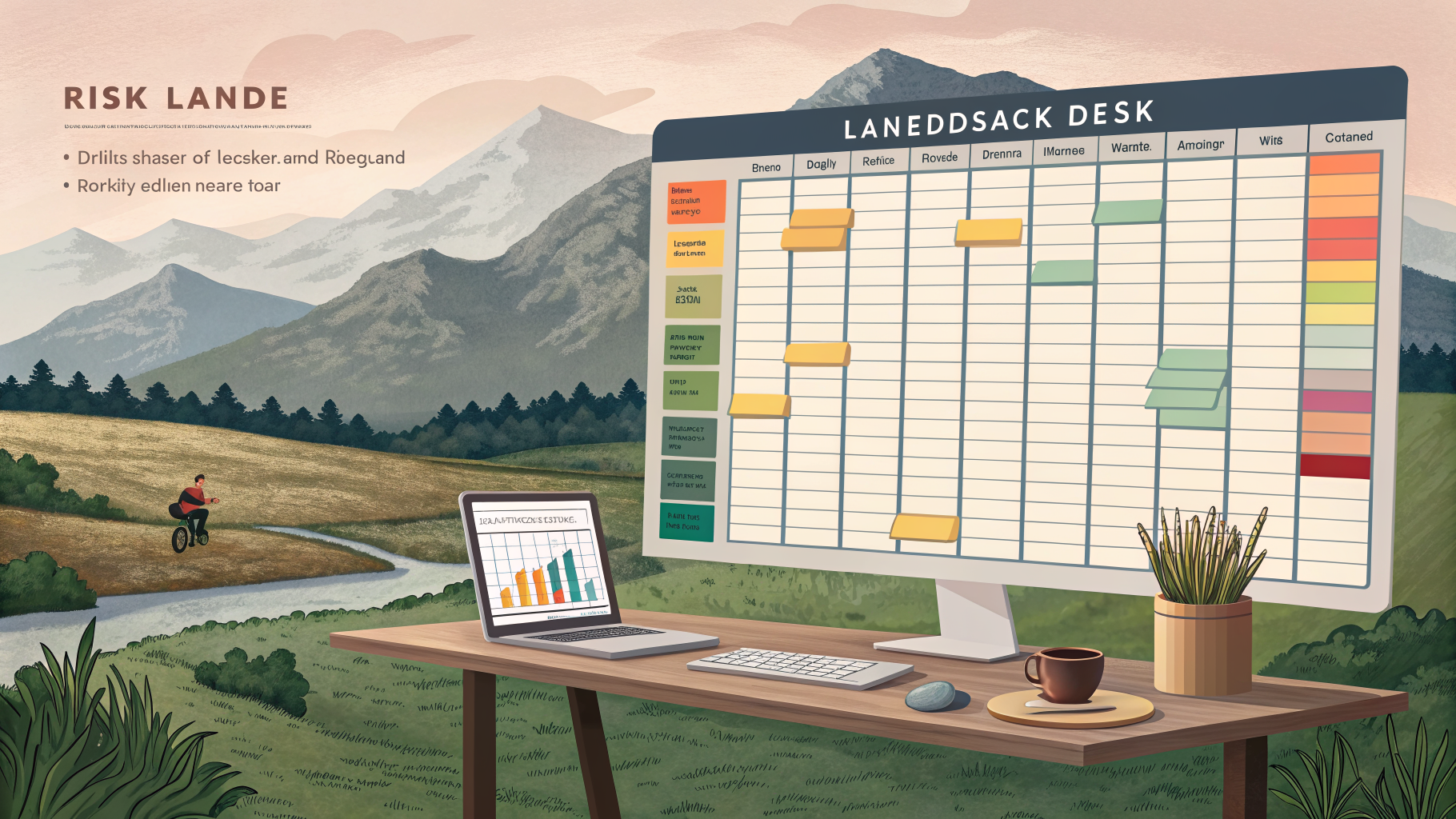
Building a Risk Register From Scratch: The Study Exercise That Pays Off on the Exam and on the Job
A risk register looks like a simple spreadsheet, but building one correctly is one of the most transferable exercises in IT risk management study. Here's how to structure the fields, which standards to borrow from, and why this drill maps directly to what CRISC-certified professionals do at work every week.
Rodney Hall, COO
August 17, 2026
Bell-LaPadula, Biba, and Clark-Wilson: What Each Security Model Actually Proves to Auditors
Auditors don't care whether your team can recite "no read up, no write down." They care whether your access control architecture matches a documented, defensible security model. This piece breaks down what Bell-LaPadula, Biba, and Clark-Wilson each prove in a compliance review, and why CISSP-certified staff are the evidence regulators expect to see.
Ric Hall, CRO
August 17, 2026

Why CISM Is the Certification Boards Look for When Naming Security Leaders
CISM isn't a technical checkbox, it's proof you can govern a security program and answer to a board. Here's why hiring committees increasingly treat it as the deciding credential for leadership promotions, not just new hires.
Randy Hall, CEO
August 17, 2026