RTO vs. RPO: The Recovery Math That Trips Up Even Strong Candidates
August 17, 2026
Rodney Hall, COO— AI-assisted and reviewed prior to publication.
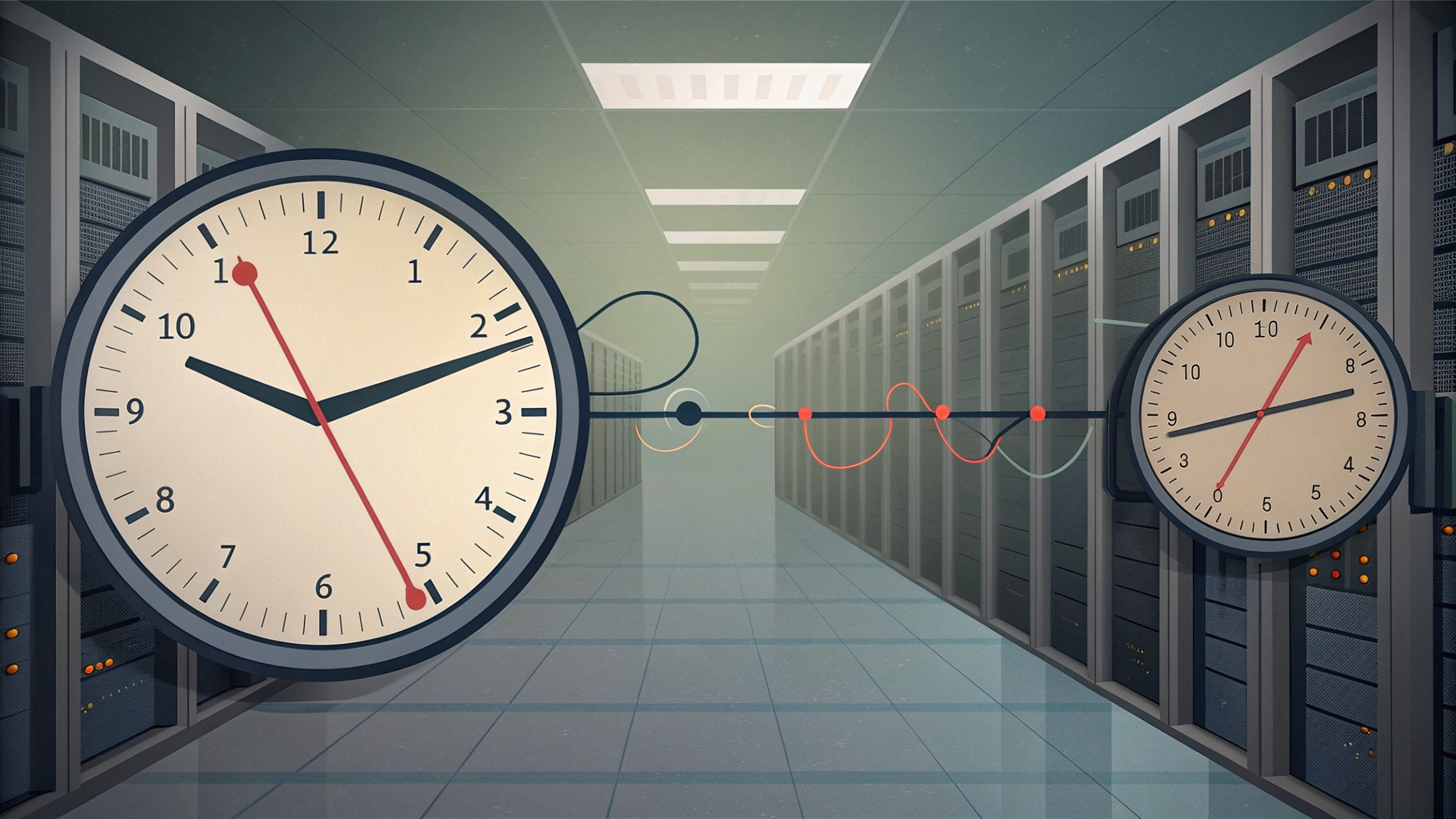
Recovery Time Objective and Recovery Point Objective measure two different things: RTO is how long a system can stay down, RPO is how much data you can afford to lose. Candidates miss exam questions not because they forget the definitions, but because they mix up direction, sequencing, and what each number actually constrains.
What's the actual difference between RTO and RPO?
RTO looks forward from the moment of failure and asks how long recovery is allowed to take. RPO looks backward from the moment of failure and asks how much data, measured in time, the organization can afford to lose. The NIST CSRC glossary defines RTO as the overall length of time a system's components can be in the recovery phase before negatively affecting the organization's mission, while its companion RPO definition describes simply the point in time to which data must be recovered after an outage.
That directional difference is where a lot of candidates lose the thread. RTO is a countdown clock that starts ticking the instant something breaks. RPO is a rearview mirror that asks how far back your last usable backup sits. One measures tolerance for downtime, the other measures tolerance for data loss, and they are set independently even though a single incident produces both numbers at once.
Why exam questions make this harder than it should be
Exam writers rarely ask you to define RTO or RPO in isolation. They embed both terms inside a scenario involving Maximum Tolerable Downtime, a backup schedule, and a specific outage window, then ask which number is violated. That format punishes memorized definitions and rewards candidates who can actually do the math under pressure.
The relationship candidates need cold is that RTO nests inside MTD, not the other way around. As one practitioner guide summarizing the federal contingency planning standard puts it, "NIST is explicit: RTO + reprocessing time must fit inside MTD. If your MTD is 48 hours and reprocessing takes 6 hours after recovery, your RTO must be 42 hours or less." Miss that nesting relationship and you will misread half the scenario questions that pair RTO with MTD in the same paragraph.
RPO creates a separate trap because it is easy to confuse with backup frequency. A backup job running every 15 minutes does not guarantee a 15-minute RPO unless the restoration process can actually reach that most recent copy. As the CSRC glossary frames it, RPO is the point in time to which data must be recovered, which is a business requirement, not a technical description of how often a job runs. Confusing the requirement with the mechanism that satisfies it is one of the most common wrong-answer traps on both the CISSP and CISM exams.
How the two numbers actually play out during a real incident
Picture a payments platform that suffers a database corruption event. The organization's Business Impact Analysis set an RTO of four hours and an RPO of fifteen minutes. According to one industry breakdown of the two metrics, "you restore operations within four hours using backups taken every 15 minutes" when the two targets are properly aligned with actual recovery capability.
Trouble starts when the numbers on paper do not match what the infrastructure can deliver. The same analysis notes that "if business requirements demand one-hour RTO but your restoration capabilities require eight hours, you have inadequate recovery infrastructure, not conflicting objectives." That distinction matters both on the exam and on the job. An RTO gap is not a paperwork problem to be argued away, it is a signal that the organization needs to invest in faster recovery infrastructure, renegotiate the business requirement, or accept documented risk.
Testing exposes these gaps before an actual incident does, which is why untested recovery plans are so dangerous. Human error remains the dominant driver of outages generally, and one industry survey found "66-80% of outages are still caused by human error, with a leading factor being individuals failing to follow procedures". A documented RTO means little if the team executing the recovery has never rehearsed the runbook.
Where these metrics sit in the certifications that test them
RTO and RPO show up across multiple credentials because business continuity and disaster recovery cut across every security discipline. ISACA's CISM exam content outline places incident handling and recovery squarely inside its incident management domain, tying containment, eradication, and recovery decisions to the same continuity planning that produces RTO and RPO targets in the first place. ISC2 builds similar expectations into the CISSP certification exam outline, where business continuity requirements sit alongside risk management as a core security and risk management competency.
If you are preparing for either exam, treat RTO and RPO as a package deal with MTD rather than three separate flashcards. Practice working scenario math in both directions, given an MTD and a stated reprocessing time, calculate the maximum allowable RTO, and given a backup schedule, decide whether the stated RPO is realistic or aspirational. Forge University's CISM certification prep walks through this scenario-based approach in detail, because the exam consistently tests application over recall on this topic.
Building this into your study plan
Treat the terminology as vocabulary you need to manipulate, not just recognize. Write out a sample BIA for a system you know, whether that is a work application or something personal, and assign it an MTD, RTO, and RPO that actually reflect what would happen if it went down. That exercise forces you to reason about the relationship between the numbers instead of memorizing which acronym goes with which definition.
A short table of the core terms and what governs each one can help while you build that intuition:
| Term | What it measures | What constrains it |
|---|---|---|
| MTD | Total acceptable outage before catastrophic impact | Business tolerance and mission requirements |
| RTO | Maximum time to restore a system after failure | Must fit inside MTD minus reprocessing time |
| RPO | Maximum acceptable data loss, measured in time | Backup frequency and replication capability |
Once you can build that table from memory for a scenario you invent yourself, the exam's scenario questions stop feeling like traps. Forge University's resources hub has a curriculum overview that maps where continuity planning topics land across different certification tracks, which is useful if you are studying for more than one exam that touches this material. If you want a structured plan that walks through BIA math, MTD nesting, and recovery scenario practice in order, you can start training whenever you are ready.
The underlying skill both exams are testing is not vocabulary recall. It is whether you can look at a stated business requirement, compare it honestly against what the current infrastructure can deliver, and know exactly where the gap sits. That is also the skill your employer needs the day an actual outage starts the clock.