Your Disaster Recovery Plan Has Numbers Nobody Verified
November 13, 2026
Rodney Hall, COO— AI-assisted and reviewed prior to publication.
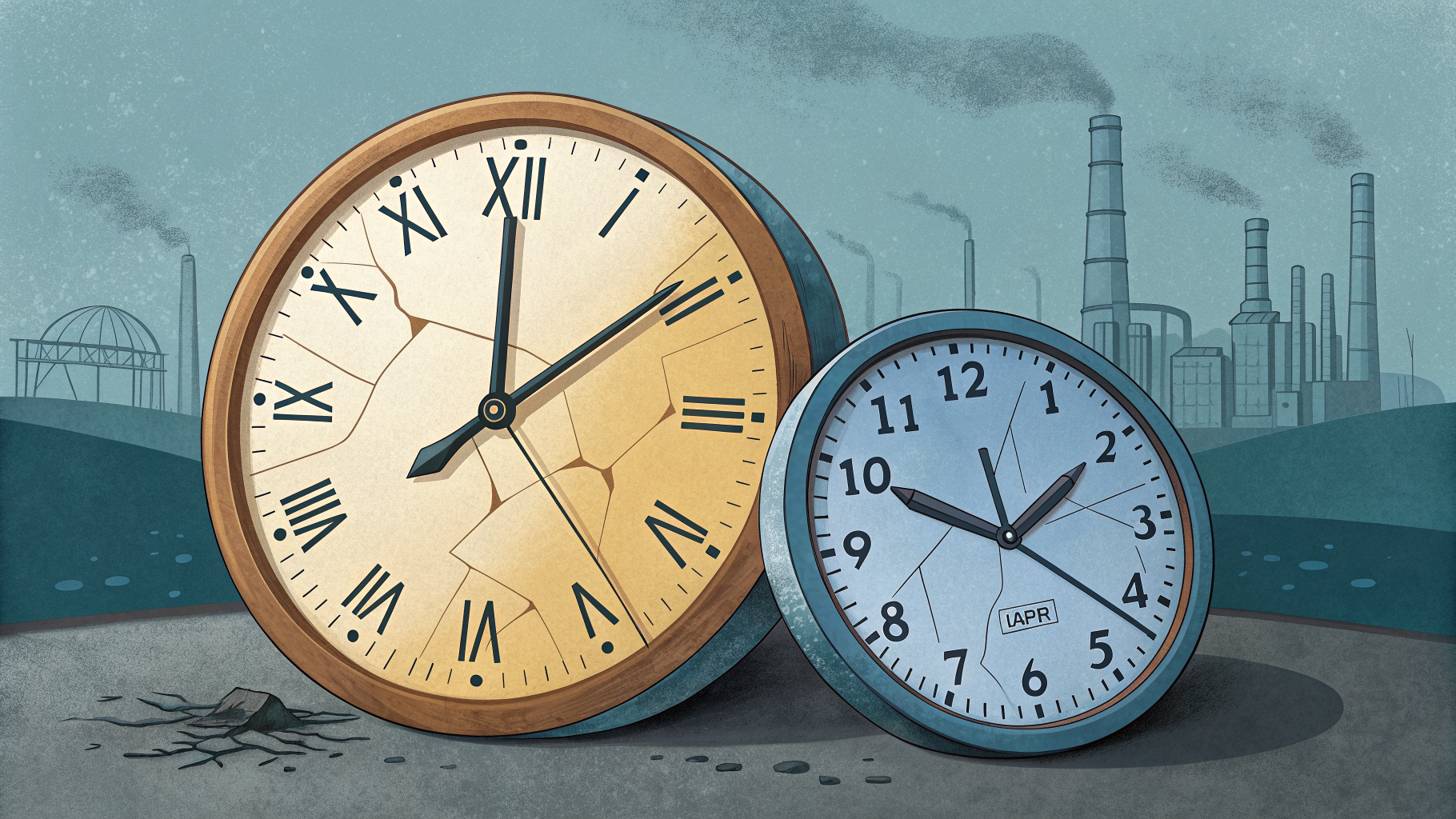
A disaster recovery plan's recovery time objective and recovery point objective are only promises until someone tests them against real infrastructure. Most organizations write these numbers down once, during a business impact analysis, and never verify them again against current backup speeds, network bandwidth, or staff availability. That gap between the documented target and the achievable reality is where recovery plans fail.
Why Do RTO and RPO Targets Stop Matching Reality?
RTO and RPO targets stop matching reality because the infrastructure underneath them changes faster than the paperwork does. A team sets a four-hour recovery time objective when the database is 500 gigabytes. Two years later the database is 4 terabytes, the backup window has grown, and nobody has rerun the math.
NIST Special Publication 800-34 frames contingency planning as a living process built on a business impact analysis that identifies recovery priorities and establishes recovery time and recovery point objectives for each system. The guidance treats those objectives as inputs to be recalculated as systems change, not as static numbers filed away after an audit. In practice, most teams treat the BIA as a one-time exercise instead of a recurring input, which is exactly how a documented four-hour RTO quietly becomes an actual nine-hour recovery.
The cost of that drift is not theoretical. The Uptime Institute's 2025 Annual Outage Analysis found that outages caused by IT and networking issues increased in 2024, even as the overall severity of outages declined. Separately, Uptime's 2024 survey data shows that more than half of operators whose most recent significant outage required recovery reported total costs exceeding $100,000, with one in five topping $1 million. Every hour that recovery runs past the documented RTO adds directly to that bill.
How Do You Actually Verify a Recovery Target Instead of Just Writing One Down?
You verify a recovery target by running the restore, timing it against a clock, and comparing the result to the documented objective, not by asking whether the backup job completed. A completed backup job only confirms that data moved somewhere. It says nothing about how long a full restore takes under production load, whether the network between sites can move that volume in the recovery window, or whether the person who knows the restore procedure is reachable at 2 a.m.
The CISA StopRansomware Guide directs organizations to maintain offline, encrypted backups of critical data and regularly test both the availability and the integrity of those backups in an actual disaster recovery scenario, not just confirm that the backup files exist. That distinction, between a backup that exists and a restore that has been timed, is the entire gap this article is about. A tabletop walkthrough of the plan is useful for coordination, but it does not substitute for a live restore test with a stopwatch running.
This is also where the cost of delay compounds beyond IT operations. The IBM Cost of a Data Breach Report 2024 put the average global breach cost at $4.88 million, and separate analysis of the same report found the average time to identify and contain a breach dropped to 258 days, still a multi-month exposure window. A slow, unverified recovery process extends that window further and adds direct recovery cost on top of breach cost.
Matching Recovery Strategy to the Target, Not the Other Way Around
Once you know the real achievable recovery time, the next decision is which recovery site strategy can actually hit it. This is where a lot of plans go wrong in the opposite direction: they pick a cheap strategy first and back into whatever RTO it happens to produce, then write that number down as the official target.
| Strategy | Typical RTO | What it requires |
|---|---|---|
| Backup and restore | Hours to a day | Offsite backup storage, no standby compute |
| Pilot light | Tens of minutes to hours | Core data replicated live, compute scaled up on failover |
| Warm standby | Minutes | Scaled-down environment running continuously |
| Multi-site active-active | Seconds to near-zero | Full duplicate environment handling live traffic |
The AWS Well-Architected disaster recovery whitepaper lays out this same progression and notes that for a disaster involving the loss of a single data center, a well-architected and highly available workload may only need a backup and restore approach rather than a standing duplicate site. The point is not that every system needs the most expensive strategy. It is that the strategy choice should follow from a verified RTO, not from whatever budget was available when the plan was last written.
This is precisely the kind of decision that separates someone who can recite disaster recovery definitions from someone who can actually run one. Hands-on training that covers backup verification, failover testing, and site strategy selection under realistic constraints, the kind of material covered in CompTIA Server+, builds the judgment to catch a stale RTO before an outage does. If your team is weighing where to start closing this gap, the Forge University resources page walks through how that curriculum maps to real server and recovery operations work.
Building the Habit of Re-Testing, Not Just Re-Reading
A recovery plan that gets reviewed but never re-tested accumulates the same kind of drift as one that is never reviewed at all, just more slowly. Reading the plan confirms the words still make sense. Running the restore confirms the infrastructure can still deliver what the words promise.
The practical fix is scheduling restore tests on a cadence tied to how often the underlying systems change, not to an arbitrary annual audit date. A system that gets a major version upgrade or a storage migration needs its recovery numbers re-verified at that point, not eleven months later when the calendar says it's time. Teams that build this habit tend to catch capacity and bandwidth problems in a controlled test window instead of during an actual incident, which is the entire point of the exercise.
If you want a study plan built around how disaster recovery, backup verification, and site strategy actually work in production environments, you can start training whenever you're ready. The gap between a documented RTO and an achievable one is not a paperwork problem. It is an operations problem, and it only shows up at the worst possible time if nobody goes looking for it first.